
Welcome forward: An afternoon of music, connection, and art
“In a world where people are turned away too often, we turn towards walking alongside people seeking safety.”… Read More
Conversations on race, community, and hope
What would our systems look like if humanity and dignity, not race, shaped who gets a chance?
That question will stay with us long after last week’s powerful community event at the Asylum Seekers Centre.
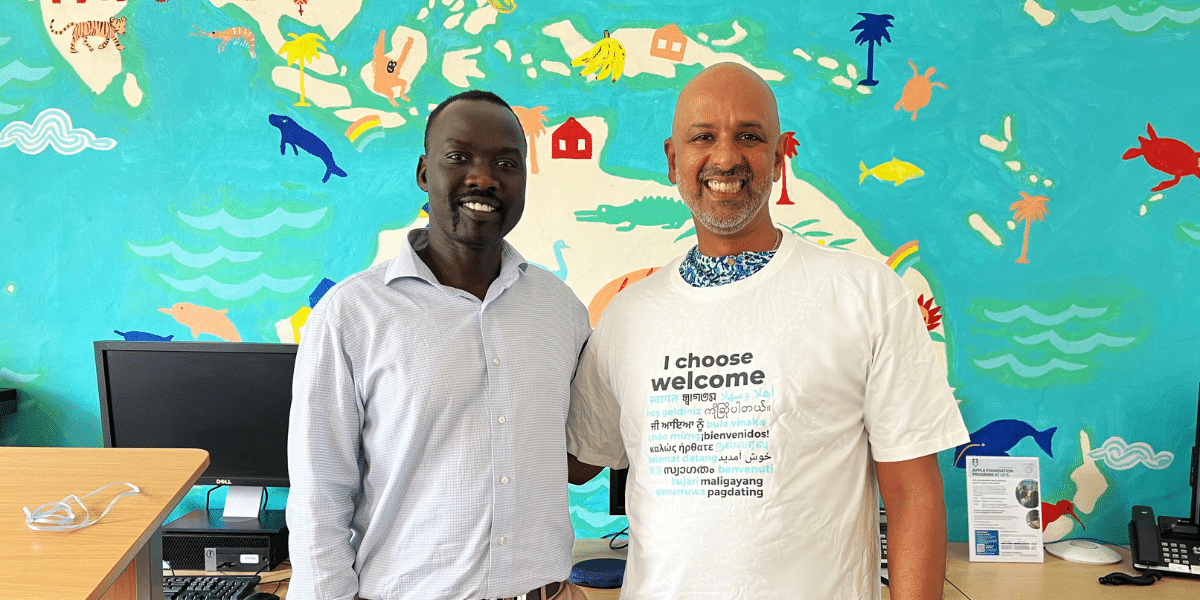
We were honoured to welcome GiridharanSivaraman, Australia’s Race Discrimination Commissioner, for a Q&A and shared lunch with staff, volunteers, and people seeking asylum. Together, we reflected on the realities of racism in Australia and on the collective work of building something better.
Giridharan spoke with honesty and warmth, affirming the work already happening at the Centre.
“Systems should work for everyone no matter what your background or disadvantage is,” he said.
Individual and structural racism
Giridharan challenged the idea that racism is only about individual actions or intent.
“People often just think about racism from person to person,” he explained. “But the racism that I want to confront is structural, systemic.”
Too often, he noted, those who call out racism face harsher consequences than those responsible for it.
“Often in this country the person that calls out racism tends to be attacked far more than the perpetrator of the racism.”
He traced these inequalities back to Australia’s colonial foundations and the legacy of the White Australia policy.
“[These systems] were designed to exclude people like me… and they are designed to exclude your clients here at the Asylum Seekers Centre.”
This reality is something we see every day. People seeking asylum continue to face complex, intersecting barriers to accessing the most basic essentials. It is a challenge we continue to work to overcome.
National Anti-Racism Framework
A key highlight of Giridharan’s address was the National Anti-Racism Framework.
This Framework provides 63 recommendations for a whole of society approach proposing reforms across sectors including health, education and workplaces.
He elaborated on employment discrimination, a challenge that many in our community face.
“Why is it that people from some countries have their qualifications recognised and others not?
“If you come from England, America, Canada or New Zealand, there’s no English proficiency test. But if you come from Kenya and you’ve studied English from the age of five, you still have to take it.”
He named the underlying belief driving these inequities.
“All of this stems back to the belief that some people and some cultures are superior to others.”
The Framework recommends urgent action to align migration and citizenship laws with international human rights standards, with attention to people seeking asylum, refugees, and migrants.
Challenge, exchange, and hope
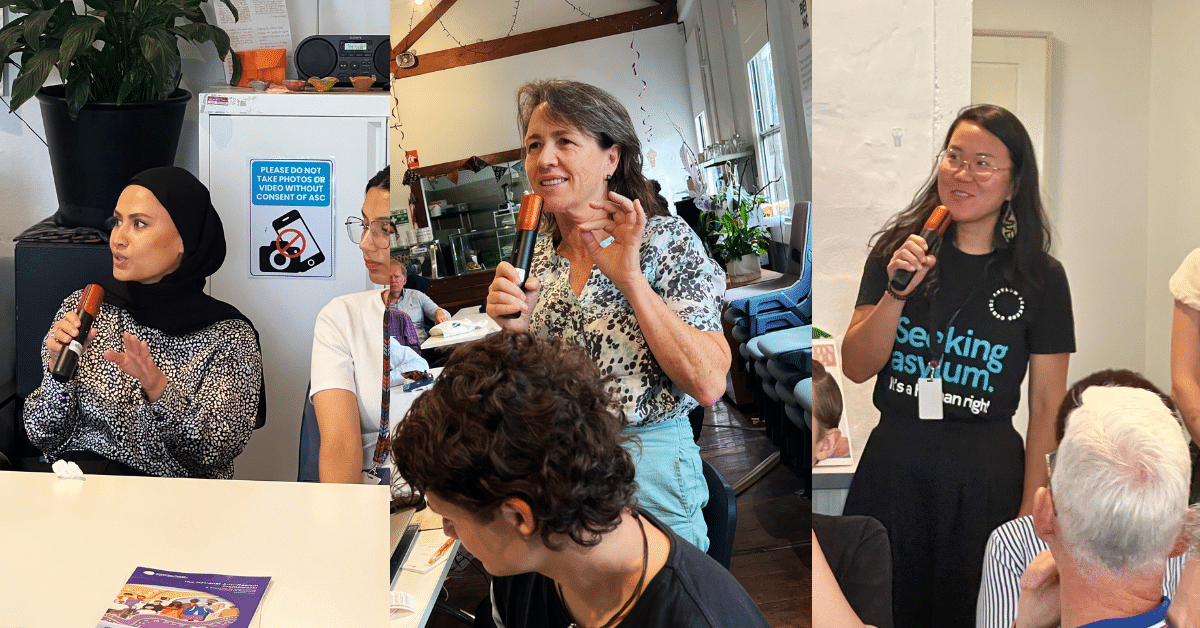
Following his address, the floor opened to a lively Q&A.
Audience members asked about the future of the Anti-Racism Framework, how to have conversations about race, and how communities can push for systemic change.
Giridharan spoke candidly about the challenges of working within an increasingly hostile political environment, but returned again and again to where hope lives.
“I get hope from community organisations like these, from communities impacted by racism who are all trying to make it better.”
He thanked the ASC’s staff and volunteers, recognising them as the lifeblood of the organisation, and paid particular respect to our community members.
“You’ve got the hardest journey… and I know even some of the staff here are probably former clients.
“That’s how it tends to work, because they always want to give back.”
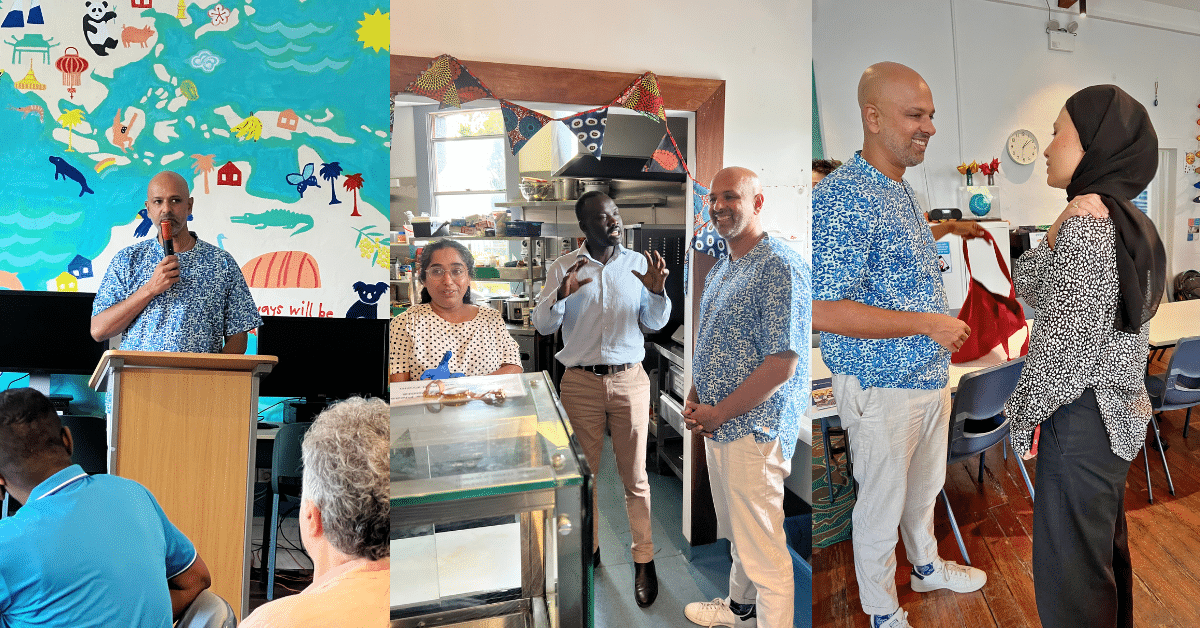
That spirit of generosity carried into the afternoon over a delicious lunch cooked by Mahtab, a refugee and former ASC community member.
A community grounded in hope
Over shared food and conversation, Giridharan continued listening, sitting at tables, engaging directly with people seeking asylum, and holding space for honest exchange.
The day was grounded in truth, solidarity, and shared purpose.
“We come into this world with nothing and we take nothing with us when we leave,” Giridharan reflected. “Our obligation is to make it better for those who come after us.
“We know people seeking asylum make an enormous contribution in this society,” he added.“I see your work and my work [as] very much aligned.”
It is a reminder that anti-racism work is not abstract.
It is practical, intentional, and built through community and action.
At the Asylum Seekers Centre, that work continues every day.
“In a world where people are turned away too often, we turn towards walking alongside people seeking safety.”… Read More
A great beginning When Hind and her family first arrived in Australia, one of the very first places they visited… Read More
"*" indicates required fields