
ASC warns against Burke Press Club legislation proposals
Rights of people seeking safety must not be compromised: ASC warns against Burke Press Club legislation proposals Commenting on Tony… Read More
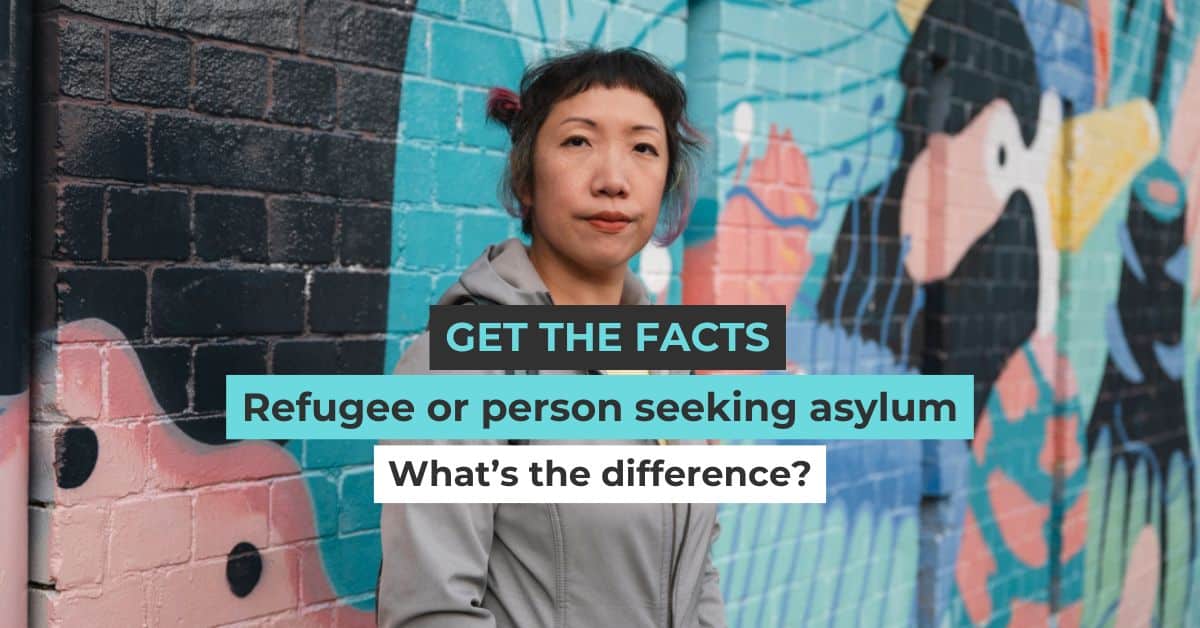
Refugee or Person Seeking Asylum – What’s the Difference?
When people flee their homes in search of safety, the words we use to describe them shape how they are seen.
The terms “refugee” and “person seeking asylum” often appear side by side, yet they have specific meanings under international and Australian law.
Understanding the difference helps us speak with care and advocate more effectively for people who have been displaced.
What does “seeking asylum” mean?
A person seeking asylum is someone who has left their country because they fear persecution or serious harm – often due to their race, religion, nationality, political opinion, or membership of a particular social group. They have arrived in another country and are asking for protection, but their claim for refugee status has not yet been decided.
In Australia, people seeking asylum may apply for protection visas either after arriving by plane or by sea. While their claim is being processed, they wait – often for months or years – for a government decision that will determine their future. During this time, access to work rights, healthcare, or social support can vary.
Who is recognised as a refugee?
A refugee is someone whose claim for protection has been accepted.
According to the 1951 United Nations Refugee Convention, a refugee is a person who cannot return to their home country because they have a well‑founded fear of persecution. In legal terms, refugee status is recognition that a person’s need for safety is deemed by Australian law as legitimate and real.
Once legally recognised as a refugee, an individual is granted protection and certain rights.
In Australia, this can include the right to live permanently in safety, work and study, reunite with family members, and participate fully in community life.
Yet, the journey does not end there – rebuilding a life in a new country brings both opportunities and challenges, including healing from trauma and overcoming barriers to employment and housing.
Why language and understanding matter
At the Asylum Seekers Centre, we choose language that reflects dignity and truth. Referring to “people seeking asylum” reminds us of the person first – individuals with names, families, and hopes for the future. Too often, political debate reduces their situation to statistics or policy. But, behind every application is a story shaped by courage and resilience.
Understanding the distinction between a person seeking asylum and a refugee also reminds us of the systems that define safety. The difference is not in the human experience itself – both groups have fled fear and loss – but, in where they stand along the path to legal recognition. That is why community support and advocacy are so important during the waiting period: safety should not depend solely on paperwork.
Taking action together
Every day, hundreds of people seeking asylum across New South Wales rely on community support while they await protection decisions.
Despite these uncertainties, many people actively contribute to their local communities, volunteering, studying, and building new friendships while navigating a complex legal system.
Every conversation that clarifies, every act of compassion, and every small show of solidarity helps transform misunderstanding into welcome, instability to hope.
Together, we can ensure that people seeking asylum in Australia are seen not as labels, but as valued members of our shared community.
Written by
Izzy Elfa
Refugee, ASC contributor
Rights of people seeking safety must not be compromised: ASC warns against Burke Press Club legislation proposals Commenting on Tony… Read More

Administrative Injustice Bill Amidst Home Affairs Minister, Tony Burke’s threatened removal of the work rights of people seeking asylum and… Read More
"*" indicates required fields